

Stretching at Home: Gentle Everyday Movements
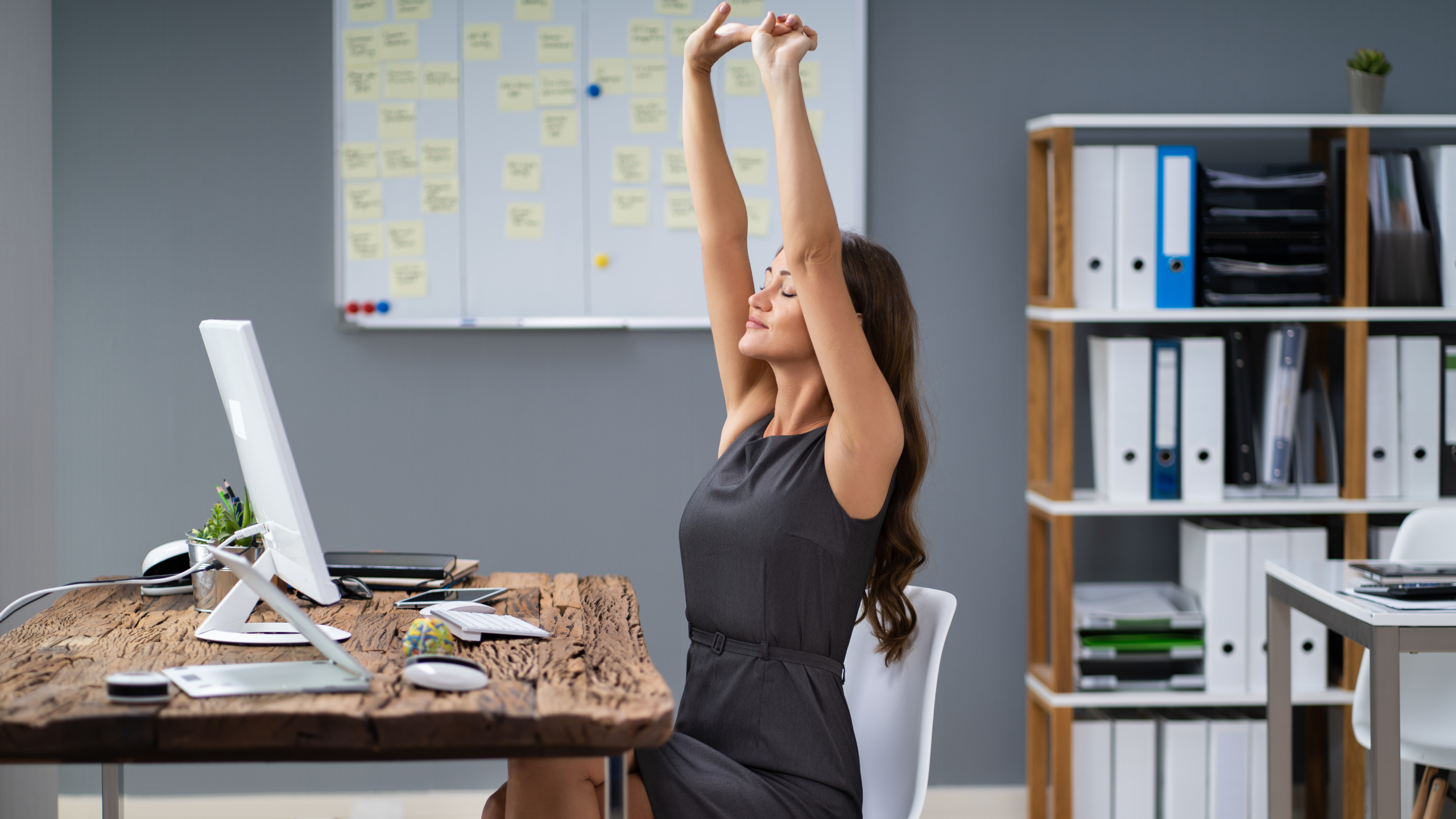
Modern working life often means long hours sitting, extended screen‑time, and limited movement – whether you’re working from home, in an office, or balancing hybrid routines. Over time, this can lead to stiffness, reduced mobility, and aches and pains. April is a great month to refresh your routines and introduce simple, gentle stretching to help your body feel more open and energised.
Stretching isn’t about athletic performance or flexibility challenges – it’s simply about keeping your body comfortable, supported, and functioning well. Even a few minutes a day can help release tension, improve circulation, and boost your overall wellbeing.
Why stretching matters
When we sit for long periods, certain muscles become tight (like hip flexors and chest muscles) while others become weak (like the glutes and upper back). This imbalance contributes to poor posture, discomfort, and long-term issues like lower back pain. Regular stretching:
- Improves blood flow
- Helps maintain mobility
- Reduces feelings of stiffness
- Supports better posture
- Helps regulate stress
- Boosts energy and focus
Before you start: a few gentle reminders
- Move slowly and never force a stretch
- Stretch to the point of mild tension, not pain
- Breathe deeply and steadily
- Hold each stretch for 20–30 seconds
- Stop immediately if anything feels uncomfortable
Six simple stretches you can do at home
These movements are suitable for all fitness levels and can be done in a few spare minutes throughout your day.
1. Neck Release
We spend a lot of time looking at screens, which can strain the neck.
How to do it:
Sit or stand tall. Gently tilt your head toward one shoulder and hold. Repeat on the other side. Add a slow forward roll to release deeper tension.
2. Shoulder Rolls
A surprisingly effective tension buster.
How to do it:
Lift your shoulders up, roll them back, and release them down. Repeat 10 times, then reverse. (You don’t need to hold these for 30 seconds).
3. Chest Opener
Great for counteracting “desk posture.”
How to do it:
Stand tall and clasp your hands behind you. Gently lift your chest and pull your shoulders back.
Benefits:
Opens tight chest muscles and helps correct rounded shoulders.
4. Seated Spinal Twist
A simple way to relieve lower-back tension.
How to do it:
Sit upright. Place one hand on the back of your chair and twist gently toward that side. Repeat on the other side.
Benefits:
Supports spine mobility and reduces stiffness.
5. Hamstring Stretch
Essential for anyone who sits for long periods.
How to do it:
Sit on the edge of a chair with one leg extended and heel on the floor. Lean forward gently until you feel a stretch.
Benefits:
Helps prevent lower back strain and improves mobility.
6. Standing Calf Stretch
Perfect if you take lots of steps indoors but little outdoor movement.
How to do it:
Stand facing a wall. Step one foot back, press the heel into the floor, and lean forward gently.
Benefits:
Loosens tight calves and supports better ankle mobility.
Building stretching into your everyday routine
Instead of treating stretching as a chore, try weaving it naturally into your day:
- A few stretches after your morning coffee
- Shoulder rolls between meetings
- A gentle neck release when your eyes feel tired
- A hamstring stretch during lunch
- Calf stretches while you wait for the kettle
These micromovements create long-term benefits.
Creating a supportive home environment
You don’t need equipment or workout space – just a chair, a wall, and a few spare minutes. Consider:
- Adding a reminder in your calendar
- Using a yoga mat if you prefer floor stretches
- Playing calming music as you stretch
- Keeping your workspace ergonomically friendly
A small change that brings big benefits
Stretching is one of the simplest wellbeing tools available – and one of the most effective. As April brings new light and energy, it’s a great time to reset your habits and give your body the care it needs to stay comfortable, mobile, and supported throughout the day.